ADGM Foundation 2026 – Cost, Charter Requirements & Setup Guide
By Daniel Harmon, Senior Editor
Search “ADGM foundation cost” and you get exactly one result that matters: ADGM’s own website. There is no independent guide, no cost breakdown, no comparison, and no opinion on whether a foundation is even the right structure for your situation. Every other result is a generic consultancy page that says “contact us for a quote.”
ADGM foundations are one of the most sophisticated structuring tools available in the UAE, and they are almost entirely undocumented outside of legal circles. This guide covers what they cost, how the charter works, when a foundation beats a trust or SPV, and the step-by-step setup process.
What Is an ADGM Foundation and How Does It Work?
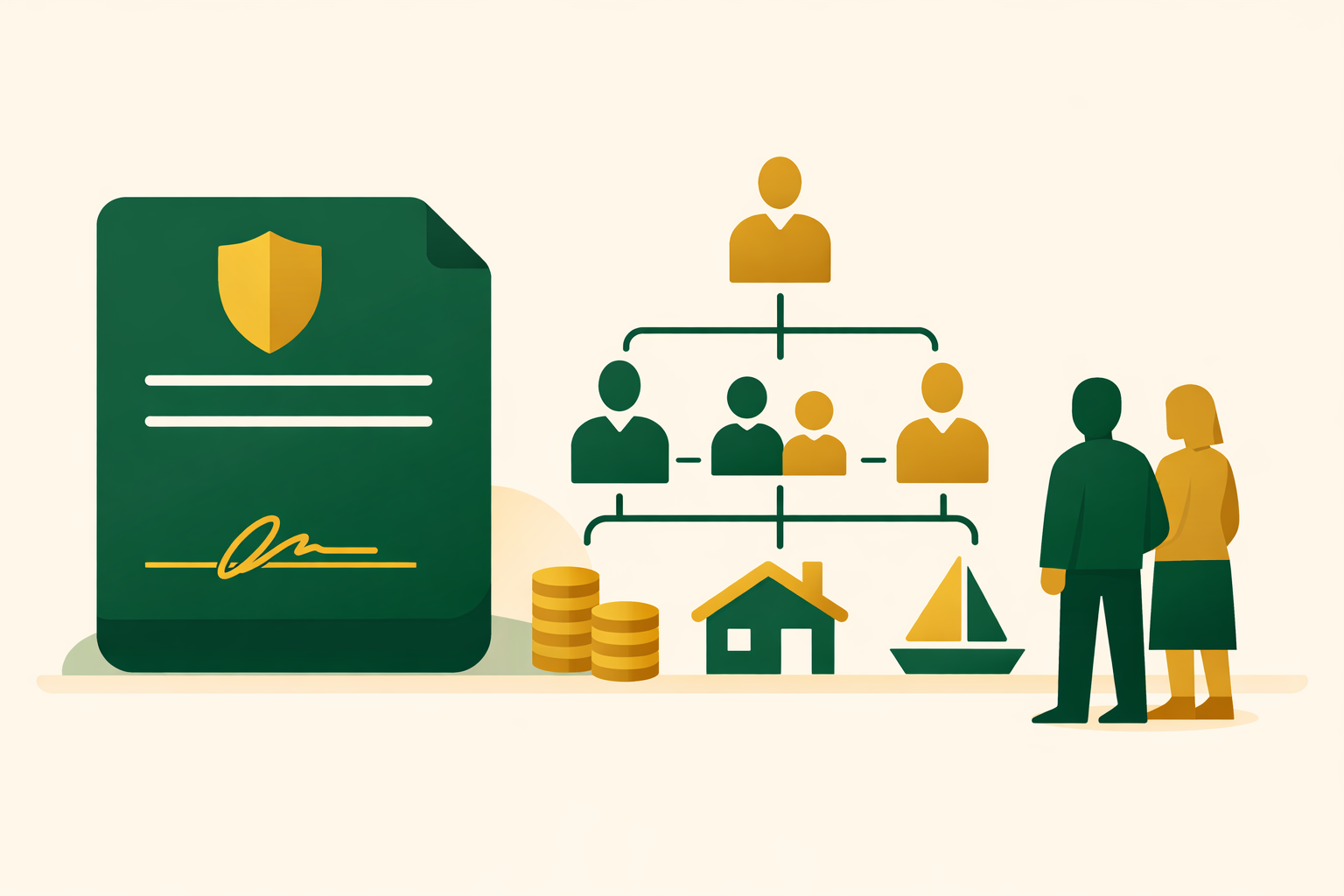
An ADGM foundation is a legal entity registered under ADGM’s Foundations Regulations. Unlike a company, it has no shareholders. Unlike a trust, it is a separate legal person. The foundation owns its assets directly — they do not belong to any individual, family, or beneficiary.
The foundation is governed by a charter — a foundational document that sets the rules for how assets are managed, who benefits from them, and what happens across generations. A council (similar to a board of directors) manages the foundation according to the charter’s terms.
Think of it as creating a permanent legal entity with its own rulebook. Once established, the foundation follows the charter’s rules even if the original founder dies, loses capacity, or changes their mind. This permanence is the entire point.
Common use cases:
- Succession planning. Wealthy families structure their assets through a foundation to ensure smooth generational transfer without probate delays, forced heirship complications, or family disputes.
- Wealth preservation. The foundation holds assets (shares, property, financial instruments) under a governance framework that prevents any single family member from liquidating or mismanaging the portfolio.
- Charitable purposes. Foundations can be established for philanthropic objectives, with the charter directing distributions to specific causes or organisations.
- Asset protection. Once assets are transferred to the foundation, they are legally separate from the founder’s personal estate. This provides protection against personal creditors, divorce proceedings, and other claims (subject to transfer timing and intent — fraudulent conveyance rules still apply).
Why Set Up a Foundation in ADGM?
The short answer: common law. The longer answer involves several structural advantages.
Common-Law Legal Framework
ADGM’s foundation regulations are modelled on English common-law principles. This matters for three reasons:
-
International recognition. Common-law foundations are understood by legal systems across the UK, Singapore, Hong Kong, Australia, Canada, and other jurisdictions. If your family’s assets span multiple countries, an ADGM foundation is governed by a framework that your lawyers in London, Singapore, or New York already understand.
-
Court enforcement. If a dispute arises about the charter’s interpretation or a council member’s conduct, ADGM Courts apply common-law precedent. The quality of dispute resolution is meaningfully higher than in civil-law free zones, where foundation-like structures may lack established case law.
-
Fiduciary standards. Council members owe fiduciary duties modelled on English-law director duties — duty of care, duty of loyalty, and duty to act in good faith. These are well-defined and enforceable through ADGM Courts.
Tax Environment
The UAE has no personal income tax, no capital gains tax, and no inheritance tax. ADGM entities can qualify for 0% corporate tax under the Qualifying Free Zone Person (QFZP) framework for qualifying income. For a foundation holding investment assets, this means:
- No tax on dividends received from underlying investments (subject to QFZP qualification)
- No capital gains tax on disposal of assets held by the foundation
- No inheritance or estate tax on the transfer of foundation benefits to beneficiaries
This tax profile, combined with common-law legal certainty, makes ADGM one of the most tax-efficient foundation jurisdictions globally. The comparison points are Jersey, Guernsey, Liechtenstein, and Panama — all of which have higher setup and maintenance costs than ADGM.
Regulatory Stability
ADGM is backed by the Abu Dhabi government and governed by Abu Dhabi Law No. 4 of 2013. The regulatory framework has been stable since ADGM opened in 2015, with incremental improvements rather than sudden overhauls. For structures designed to last decades (or longer), regulatory stability matters as much as cost.
How Much Does an ADGM Foundation Cost?
FreeZoneCompare verified data (May 2026):
| Cost Component | Amount | Frequency | |---|---|---| | Foundation registration | ~AED 20,000 – 25,000/year | Annual | | Data protection fee | AED 1,101/year | Annual | | Charter drafting (legal counsel) | AED 10,000 – 30,000 | One-time | | Bylaws drafting | AED 5,000 – 15,000 | One-time | | Registered agent | AED 3,000 – 8,000/year | Annual | | Initial endowment | Varies (no minimum published) | One-time | | Council member services (if professional) | AED 10,000 – 30,000/year | Annual | | Annual accounting and compliance | AED 5,000 – 15,000/year | Annual |
Scenario 1: Simple family succession foundation Registration (AED 22,000) + data protection (AED 1,101) + charter drafting (AED 15,000) + registered agent (AED 5,000) + accounting (AED 5,000) = ~AED 48,000 Year 1, ~AED 33,000/year ongoing.
Scenario 2: Complex multi-generational wealth structure Registration (AED 25,000) + data protection (AED 1,101) + charter and bylaws (AED 30,000) + professional council member (AED 20,000) + registered agent (AED 8,000) + accounting (AED 15,000) = ~AED 99,000 Year 1, ~AED 69,000/year ongoing.
Scenario 3: Charitable foundation Similar to Scenario 1, but the charter must include specific charitable objectives, distribution policies, and potentially public reporting requirements. Legal costs tend to be higher (AED 20,000-40,000) because charitable charters require more detailed drafting to satisfy ADGM’s requirements.
These costs are comparable to foundation structures in Jersey (GBP 5,000-15,000 annual) and lower than Liechtenstein (CHF 12,000-30,000 annual). The UAE tax advantage tips the scale further in ADGM’s favour for most family structuring scenarios.
What Does an ADGM Foundation Charter Contain?
The foundation charter is not a template you fill in. It is a bespoke legal document that governs the foundation’s entire existence. Getting it right matters more than any other aspect of the setup.
Mandatory Charter Contents
ADGM’s Foundations Regulations require the charter to include:
-
Foundation name. Must include “Foundation” in the name and comply with ADGM naming rules.
-
Objectives. The charter must state the foundation’s purpose — succession planning, wealth preservation, charitable activities, or a combination. Vague objectives (“general purposes”) are not acceptable. ADGM requires specific, defined objectives.
-
Initial endowment. The assets or capital transferred to the foundation at establishment. There is no published minimum, but the endowment should be proportionate to the foundation’s stated objectives. A succession foundation for a multi-million-dollar portfolio should not be endowed with AED 1,000.
-
Council composition. The charter must define:
- Number of council members (minimum 2 for most foundations)
- Appointment and removal procedures
- Term lengths
- Decision-making rules (majority, unanimous, etc.)
- Remuneration provisions
-
Beneficiary designation. The charter names specific beneficiaries or defines a class of beneficiaries (e.g., “all direct descendants of the founder”). It must also specify:
- Distribution rules (when, how much, under what conditions)
- Discretionary vs mandatory distributions
- Conditions for adding or removing beneficiaries
-
Amendment provisions. Can the charter be amended? By whom? Under what conditions? A well-drafted charter will include:
- Reserved matters that cannot be amended (protecting core objectives)
- Amendment procedures for other provisions
- Whether founder consent is required during their lifetime
-
Dissolution. What happens if the foundation is wound up? How are remaining assets distributed? The charter must address this even if dissolution is not anticipated.
Charter Drafting: Do Not Cut Corners
The charter drafting fee (AED 10,000-30,000) is the most important investment in the entire setup. A poorly drafted charter creates decades of problems:
- Ambiguous distribution rules lead to family disputes
- Vague amendment provisions allow future council members to alter the founder’s intentions
- Missing conditions for beneficiary changes create governance paralysis
- Inadequate dissolution clauses trap assets in a structure nobody wants
Engage an ADGM-experienced law firm — not a generalist free zone consultancy. The charter is a governance document, not a registration form. Firms with foundation-specific experience in ADGM include international practices with Abu Dhabi offices and specialised private client teams.
Should You Choose a Foundation, Trust, or SPV?
This is the question every wealth structuring client asks. The answer depends on three factors: control, ownership, and purpose.
| Factor | Foundation | Trust | SPV | |---|---|---|---| | Legal personality | Yes — separate entity | No — arrangement between parties | Yes — separate entity | | Ownership of assets | Foundation owns them | Trustee holds for beneficiaries | SPV owns them (shareholders own SPV) | | Governance | Charter + Council | Trust deed + Trustee | Articles + Directors + Shareholders | | Control | Founder sets charter rules | Trustee has fiduciary discretion | Shareholders control through votes | | Flexibility | Charter amendments (if permitted) | Trustee discretion within deed terms | Shareholder resolutions | | Succession | Charter governs — no probate | Deed governs — no probate | Shares pass by inheritance — probate may apply | | Privacy | Higher (no shareholders on public register) | Highest (trust deeds are private) | Lower (shareholder registry exists) | | Cost (ADGM) | AED 20K-25K/year | AED 15K-25K/year | AED 15K-21K/year | | Best for | Permanent succession, founder control, charity | Flexible asset management, professional trustee | Commercial holding, investment, short-term structures |
When to Choose a Foundation
- You want to set permanent rules that govern asset distribution across generations
- You do not want any individual to “own” the assets — the foundation itself is the owner
- You want to maintain control through the charter rather than relying on trustee discretion
- You are structuring a charitable endowment with specific philanthropic objectives
- You want a structure that survives the founder indefinitely without the need for trustee succession
When to Choose a Trust
- You want flexibility in how assets are managed and distributed
- You trust a professional trustee to exercise good judgment within broad parameters
- You want the highest privacy — trust deeds are not public documents
- Your assets require active management by a sophisticated fiduciary
- You are comfortable delegating control to a trustee
When to Choose an SPV
- Your needs are purely commercial — holding shares, structuring investments
- You want clear shareholder ownership and the ability to sell ownership through share transfer
- The holding is temporary (project-specific, fund-specific) rather than permanent
- You need the simplest and cheapest structure
- Read our ADGM SPV guide for detailed SPV costs
For most high-net-worth families considering multi-generational planning, the foundation is the strongest tool. It combines the founder’s permanent control (through the charter) with the legal independence of a separate entity (no shareholder claims) under a common-law framework (ADGM Courts). Trusts offer more flexibility but less founder control. SPVs are commercial tools, not succession vehicles.
The Setup Process — Step by Step
| Step | Duration | What Happens | |---|---|---| | 1. Engage specialist counsel | Week 1-2 | Select ADGM-experienced private client lawyers | | 2. Structuring and charter drafting | Week 2-6 | Define objectives, beneficiaries, council, distribution rules | | 3. Bylaws preparation | Week 4-6 | Operational rules for council meetings, decision-making | | 4. Submit ADGM registration application | Week 6-7 | Online via ADGM portal with charter and supporting documents | | 5. ADGM review | Week 7-10 | KYC on founder, council members, beneficiaries | | 6. Foundation registration and licence | Week 10-11 | Certificate of registration issued | | 7. Bank account opening (if needed) | Week 11-18 | FAB or ADCB — expect 4-8 weeks for foundations | | 8. Asset transfer | Week 18+ | Transfer assets to foundation ownership | | Total | 4-5 months | |
The charter drafting phase is the longest — not because ADGM is slow, but because the founder needs to make decisions about beneficiaries, distribution, governance, and amendments that will govern the structure for decades. Rushing this phase is a mistake that creates expensive problems later.
ADGM’s registration review takes 3-4 weeks once the application is complete. The authority reviews the charter, verifies identities, and confirms that the foundation’s structure complies with the Foundations Regulations.
Banking for foundations follows the same Moderate-rated process as other ADGM entities. FAB and ADCB are the recommended banks. Expect the same 4-8 week timeline as SPVs, with full UBO and source-of-wealth documentation required. See our banking guide for details.
Common Use Cases — Real Examples
Family Succession in a Regional Business
A GCC family with operating businesses across three countries creates an ADGM foundation to hold shares in all three operating companies. The charter specifies that control passes to the eldest child upon the founder’s death, distributions are made equally to all children, and no shares can be sold outside the family without unanimous council approval. The common-law framework ensures that the charter is enforceable in ADGM Courts regardless of the inheritance laws in the countries where the operating companies are located.
Charitable Endowment
An entrepreneur creates an ADGM foundation with AED 10 million in endowment to fund educational scholarships in the UAE. The charter directs the council to distribute 5% of assets annually to qualifying educational institutions. The foundation’s assets are invested for long-term growth, and the charter includes provisions for adjusting the distribution rate based on market conditions. The structure is permanent — it survives the founder and operates according to the charter indefinitely.
Asset Protection for International Entrepreneurs
A tech founder with assets in Dubai, London, and Singapore creates an ADGM foundation to consolidate ownership of real estate and investment portfolios. The foundation structure places assets beyond the reach of personal creditors (subject to transfer timing and good faith requirements). The common-law framework provides a governance structure that is recognised by legal systems in all three jurisdictions.
Ongoing Compliance
ADGM foundations must:
- File annual accounts with the Registration Authority (simplified filing for foundations with limited transactions)
- Pay the annual data protection fee of AED 1,101
- Maintain a registered agent in ADGM
- Keep council minutes of all meetings and decisions
- Notify ADGM of any changes to the charter, council composition, or beneficiaries within 15 days
- Maintain a register of beneficiaries accessible to ADGM on request
The compliance burden is moderate — heavier than a simple SPV, lighter than an FSRA-regulated entity. Budget AED 5,000-15,000/year for professional compliance and accounting services.
Who Should — and Shouldn’t — Set Up an ADGM Foundation
Set up an ADGM foundation if:
- You are planning multi-generational wealth transfer and want permanent, enforceable rules
- You need asset protection under a common-law jurisdiction
- You want to establish a charitable endowment with defined distribution rules
- Your family’s assets span multiple countries and you need a single governing framework
- You want to separate ownership from control (no shareholder claims on foundation assets)
Do not set up an ADGM foundation if:
- Your needs are purely commercial — use an ADGM SPV or LTD instead
- Your total assets are under AED 1 million (the setup and maintenance costs are disproportionate)
- You want to maintain direct personal ownership of assets (foundations remove personal ownership by design)
- You need the structure within 30 days (charter drafting takes 4-6 weeks minimum)
- You are setting up a basic holding company for investment (an SPV is simpler and cheaper)
ADGM foundations are a powerful tool for the right situation. But they are not the right tool for most situations. The charter drafting process alone costs more than an entire year of IFZA licensing. Before committing, ask yourself whether the permanence and governance that a foundation provides is genuinely what you need — or whether a simpler structure would accomplish the same goal at a fraction of the cost.
Use our cost calculator to compare basic ADGM setup costs and explore the full range of 42 UAE free zones available.
Prices based on ADGM Registration Authority published guidance and market rates as of May 2026. Foundation-specific fees may vary based on complexity and any promotional rates in effect. Charter drafting costs reflect market rates from ADGM-registered law firms. Engage specialist legal counsel for binding fee quotes.
Frequently Asked Questions
How much does an ADGM foundation cost?
ADGM foundation registration costs approximately AED 20,000-25,000/year, which includes the registration fee and annual data protection fee (AED 1,101). Add AED 10,000-30,000 for legal drafting of the charter and bylaws, AED 3,000-8,000/year for a registered agent, and AED 5,000-15,000/year for accounting and compliance. Total Year 1 is roughly AED 38,000-78,000 depending on complexity.
What is the difference between an ADGM foundation and a trust?
A foundation is a separate legal entity that owns its assets directly — it has no shareholders or owners. It is governed by a charter and managed by a council. A trust is not a separate entity — it is a fiduciary arrangement where a trustee holds assets for beneficiaries. Foundations offer more control to the founder through the charter, while trusts rely on the trustee's fiduciary duty. Foundations are better for succession planning where the founder wants to set permanent rules; trusts are better for flexible asset management.
What does an ADGM foundation charter contain?
The charter is the foundation's governing document. It must include the foundation's name, objectives (charitable, wealth preservation, family succession, etc.), initial endowment, council composition and appointment rules, beneficiary designation or class, distribution rules, amendment provisions, and dissolution procedures. ADGM requires the charter to be professionally drafted and filed with the Registration Authority.
Can an ADGM foundation hold assets outside the UAE?
Yes. An ADGM foundation can hold shares in companies, real estate, financial instruments, and other assets in any jurisdiction. The foundation operates under ADGM's common-law framework, but the assets themselves can be located anywhere. This is one of the primary advantages — using an internationally recognised common-law entity to consolidate global family wealth under a single governance structure.
Who should set up an ADGM foundation?
ADGM foundations are best for high-net-worth individuals and families who need a permanent vehicle for succession planning, wealth preservation across generations, or charitable activities. Common use cases include family offices structuring generational transfers, entrepreneurs creating endowments, and individuals seeking asset protection under common law. If your needs are purely commercial (holding shares for investment), an ADGM SPV is simpler and cheaper.
Free Zones in This Article
Compare These Zones
Related Articles
ADGM FSRA Forex Broker License 2026: Categories, Capital & Fees
June 2026
SetupADGM Crypto License 2026 – FSRA Costs, Capital Requirements & What You'll Actually Pay
May 2026
SetupADGM Fintech License 2026 – RegLab, Sandbox & Full Licence
May 2026
SetupADGM Flexi Desk Cost 2026 – AED 12,000/yr (Is It Worth It?)
May 2026
SetupADGM SPV Cost 2026 – Setup From AED 15,000, Full Breakdown
May 2026
SetupDMCC Company Setup Cost Dubai 2026 — What You'll Actually Pay
April 2026
Guides & Tools
Need help choosing a free zone?
Get a free quote from our verified partners — or use our calculator to compare costs across 40+ zones.
Need help choosing?
Compare 42 free zones